
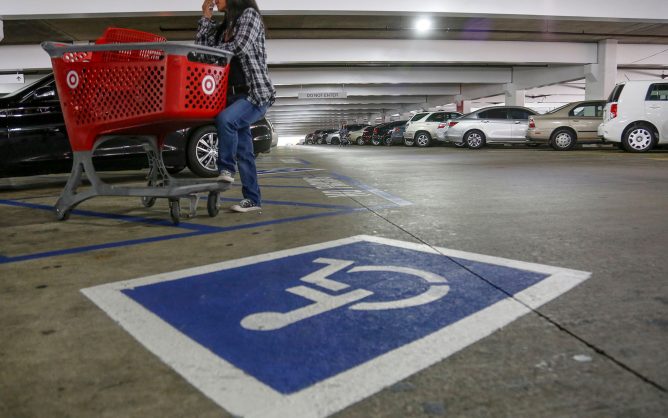
Should Pregnant Women Park In Spots For People With Disabilities? Lawsuit Says No

A recent lawsuit in Florida is raising important questions about disability rights, accessibility, and how communities support individuals with disabilities. The case highlights how critical accessible parking is for people who rely on mobility devices in order to participate fully in daily life.
The lawsuit was originally reported by Disability Scoop and the Miami Herald (© 2025 Miami Herald, distributed by Tribune Content Agency, LLC). The story has been adapted here to support disability advocacy and awareness within the LVCCH community.
Background: The New Florida Parking Law
On July 1, a new Florida law went into effect that allows pregnant women to obtain temporary permits to park in accessible parking spaces for up to one year. The law was signed by Governor Ron DeSantis in June and was intended to provide closer access for expectant mothers facing mobility challenges during late pregnancy.
However, the change has led to concern and frustration from some members of the disability community who rely on accessible parking for everyday activities.
The Lawsuit: Protecting Access for People With Disabilities
Olivia Keller, 48, a Leon County resident and disability advocate, filed a federal lawsuit on October 27 arguing that the new law violates the Americans with Disabilities Act (ADA). Keller uses a power wheelchair and drives a modified van with a mobility ramp, meaning she can only park in van-accessible spaces with access aisles.
According to her complaint, those spaces are already extremely limited — and allowing non-disabled individuals to use them makes an already challenging situation even worse.
Keller says that on many days she must arrive hours early to her job or medical appointments just to secure a parking spot. Lack of access impacts her ability to shop, attend community events, socialize, and participate in activities most people take for granted.
Why Accessible Parking Matters
Keller, born with upper bilateral amelia (absence of both arms), scoliosis, and a right leg length discrepancy, explained how accessible parking has been essential to building her independence:
“While parking may seem unimportant to most people, disabled parking has been one of my most valuable tools… Without these spaces, I wouldn’t have been able to do all of the things I have done.”
Her attorney, Matthew Dietz — a law professor and director of the Disability Inclusion and Advocacy Law Clinic at Nova Southeastern University — argues that the law “demonstrates a total lack of awareness” of the needs of more than 1.3 million Florida residents with permanent disability permits.
The case is being handled pro bono through the university’s disability rights clinic.
Why the Law Was Introduced
Before the bill passed, sponsor Rep. Fiona McFarland shared that the idea came from her own experience being nine months pregnant and struggling to walk across hot parking lots. She clarified that she does not consider pregnancy a disability but wanted expectant mothers to have easier access to parking.
However, Keller’s lawsuit argues that this well-intentioned change creates real barriers for people with lifelong disabilities.
Keller’s Goal: Protecting Access and Independence
Keller is asking the court to declare the law in violation of federal disability protections and to stop the state from issuing disability parking placards to pregnant women.
She emphasizes that the issue goes far beyond convenience:
“Losing access to parking not only jeopardizes employment and doctor’s appointments. It isolates me from my community… When all I can do is drive by the places I want to go without being able to enter, I feel like a prisoner trapped in my car.”
Why This Story Matters to LVCCH
At Lehigh Valley Companion Care Homes, we work every day alongside individuals with Intellectual and Developmental Disabilities who depend on accessible environments to live confidently, safely, and independently.
Stories like this remind all of us — families, community partners, DSPs, and policymakers — that accessibility is not optional. It is essential.
As this case moves forward, it underscores a message we value deeply at LVCCH:
Accessibility is dignity. Full inclusion requires practical support, understanding, and the protection of rights for people with disabilities.