

AI Powers Communication App for People with Disabilities to Deliver Quick Jokes and Join the Fun

AI Powers Communication App for People with Disabilities to Deliver Quick Jokes and Join the Fun
At Lehigh Valley Companion Care Homes (LVCCH), we believe that communication is connection — and connection is at the heart of Love, Care, and Companionship. For many individuals with intellectual and developmental disabilities, expressing thoughts quickly in a fast-moving conversation can be challenging. But an exciting new innovation from the University of Maryland is opening doors for more natural, lively, and even humorous communication.
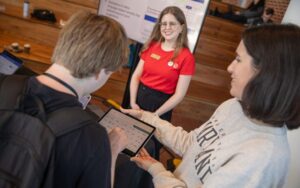
A team led by Assistant Professor Stephanie Valencia has developed Spoken,(Apple Version and Android Version) an advanced augmentative and alternative communication (AAC) app designed to help people who use speech-generating devices participate more fully in everyday conversations.
Valencia explains that timing is everything:
“In a group discussion, there’s a window of opportunity when your comment is relevant. If you’re an augmented communications voice user, there can be a delay. By the time you’ve typed your message, the conversation has already moved on.”
How the Technology Works
Spoken uses artificial intelligence to help users generate relevant, well-timed responses with far more speed. Instead of typing full sentences, users can enter just a few keywords, and the app helps build a complete thought that matches the flow of the conversation.
The app supports a wide range of AAC users — including those who communicate using tablets, eye-gaze systems, picture boards, or assistive switches. These tools are essential for people living with conditions such as cerebral palsy, the effects of stroke, traumatic brain injuries, or aphasia.
Aphasia can make it difficult for a person to form sentences even when they know exactly what they want to say. Doctoral student Lee Jong Ho, a member of the research team, explains:
“Commercial AI tools can be very language-intensive. This app helps people with aphasia make complete sentences from just a few words.”
Yes — There’s a Joke Mode!
What truly makes this app special is its ability to support humor, not just basic communication. Many AAC users say they struggle to join in when friends or family exchange jokes or lighthearted comments.
The new app introduces a playful feature called “Why So Serious?” — a mode that automatically generates jokes or humorous comments based on the ongoing conversation. Users can tap on parts of the audio transcript to shape the joke or choose a one-click version that creates an instant zinger.
The research team tested four different interface styles, each offering a different level of user control. Surprisingly, many users preferred the fully automatic mode. Jong Ho explains why:
“It will use a portion of the conversation to make a humorous comment that’s appropriate in that moment. Timing a joke is about connection, so even if the user has less control, the payoff is greater because they get to share in that moment with everyone else.”
Why Innovations Like This Matter for the LVCCH Community
At LVCCH, our Direct Support Professionals see firsthand how communication tools can empower the people we serve. Technologies like Spoken are not just devices — they are bridges to independence, dignity, and social belonging.
Being able to add a quick comment, share a meaningful thought, or crack a well-timed joke helps our residents:
-
Build relationships
-
Express their personality
-
Feel confident in social settings
-
Participate more actively in group activities
-
Share laughter — one of the most human connectors of all
This innovation also supports DSPs by reducing communication barriers and helping them better understand residents’ wants, needs, and unique personalities.
Continuing Our Mission
As new technologies emerge, LVCCH remains committed to learning, adapting, and embracing tools that improve the lives of individuals with IDD. Every voice deserves to be heard — and now, even the jokes can be heard too!

Awesome and inclusive innovations. God bless.